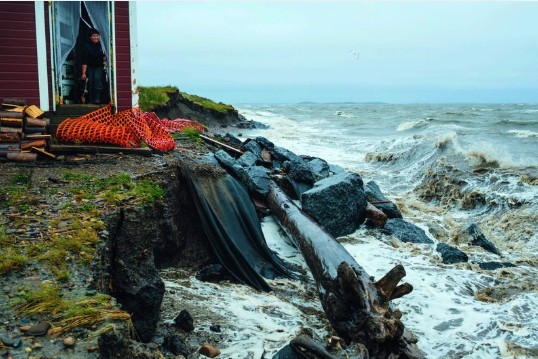
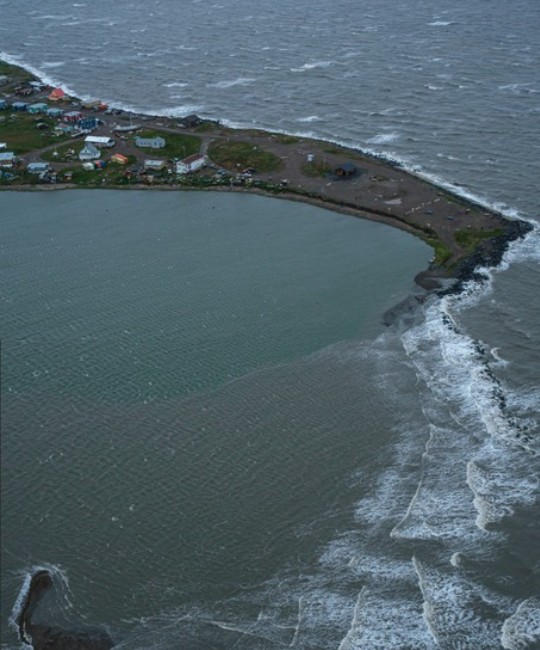
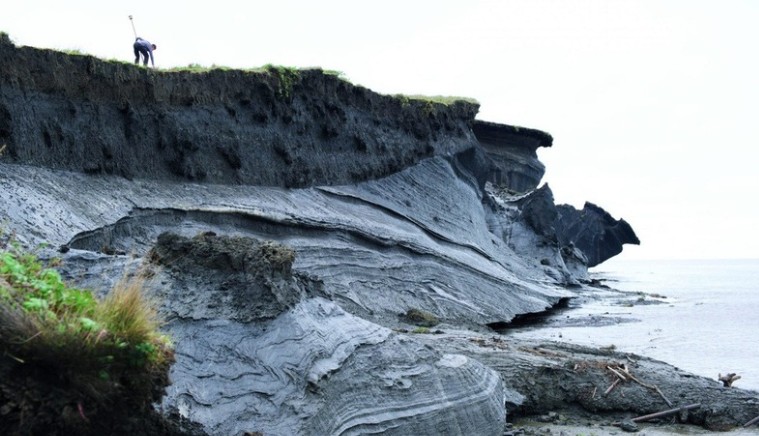
Tuktoyaktuk has always been shaped by the land, sea, and ice. But today, climate change is accelerating coastal erosion, storm surges, and permafrost thaw at a pace that threatens the community’s future. With homes already needing urgent relocation and Tuk Island steadily eroding, the need to act is immediate.
A Community-Led Response
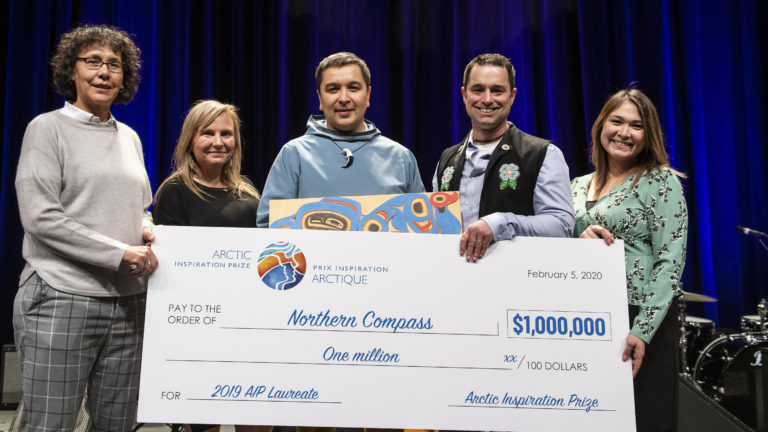
In 2021, the Tuktoyaktuk Community Climate Resiliency Project received $500,000 from the Arctic Inspiration Prize to support a community-designed initiative focused on strengthening local knowledge, monitoring capacity, and long-term planning, including the possibility of relocation. The project builds on Tuktoyaktuk’s success in community-based monitoring by turning climate knowledge into real, practical action.
“…The Knowledge Centre is accelerating itself because of the work being done through the funding from the AIP. We were able to have someone work on it on an ongoing basis with young people involved in monitoring [and] safety meetings.” ~ Nellie Cournoyea
Building Skills, Safety, and Local Data
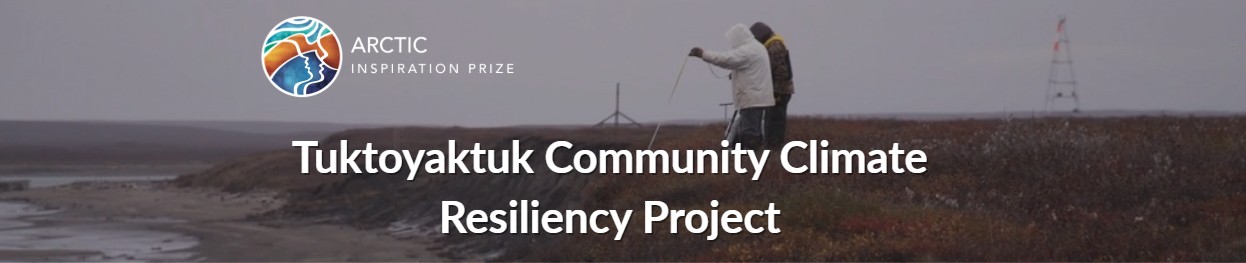
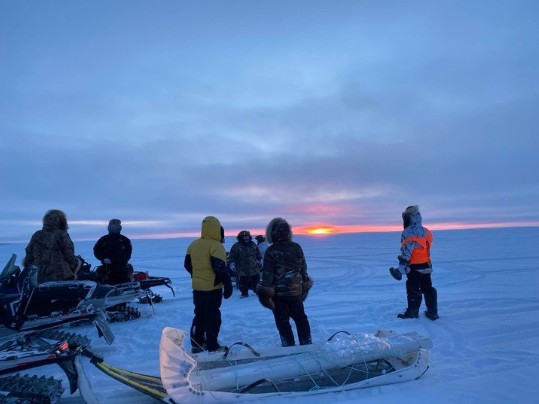
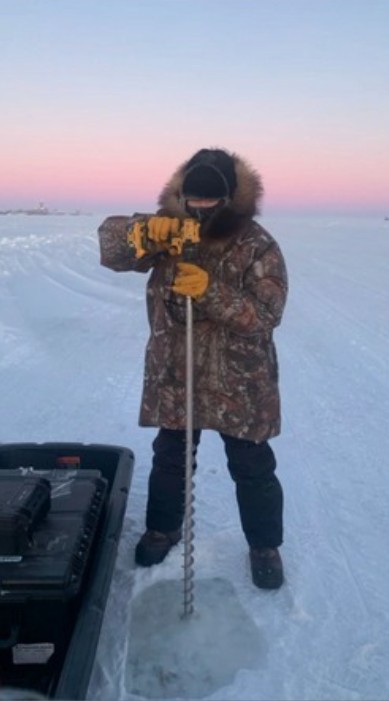
Through the project, more than 25 community members, including youth, have received hands-on training in environmental monitoring and safety, from boat and snowmobile training to drone operation, bear safety, and first aid. Community Monitors now collect critical data on ice thickness, snow depth, water chemistry, and temperature, supporting both day-to-day safety and long-term decision-making.
Turning Knowledge into Action
Working with SmartICE (another AIP Laureate), the project combines Inuit knowledge with modern tools like the SmartQAMUTIK, a traditional sled equipped to measure ice and snow conditions in real time. The data gathered is stored and managed locally, ensuring Tuktoyaktuk remains the steward of its own information. This work has helped build momentum for larger-scale shoreline protection, including a major federal investment to strengthen coastal defenses and reduce wave impacts on Tuk Island.
Looking Ahead
The Tuktoyaktuk Community Climate Resiliency Project is a great example of community leadership in the face of climate change, supporting local skills, youth learning, and the knowledge needed to protect what matters most, now and for generations to come.